
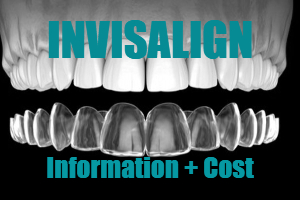
Should I Undergo Invisible Aligners — Invisalign® Treatment?
You may have been told that your teeth can be straightened with invisible aligners such as Invisalign®. Perhaps you have crowded teeth, gaps, crooked teeth or a bite that could be improved.
And the first thought may be:
“Do I really need orthodontic treatment? My teeth have always been like this.”
Or perhaps:
“If I am going to undergo treatment, why should I choose invisible aligners rather than conventional braces?”
These are very reasonable questions.
Invisible aligners have made orthodontic treatment much more acceptable to many adults because they are discreet, removable and can fit more easily into everyday life. But the fact that a treatment is modern, invisible or convenient does not automatically mean that it is the right treatment for every patient. Clear aligners are one orthodontic option among several, and suitability depends on the individual’s teeth, bite and treatment objectives. (American Association of Orthodontists)
Why should I straighten my teeth if they don’t really bother me?
Some patients seek orthodontic treatment because they dislike the appearance of their teeth. Others may have difficulty cleaning crowded areas, problems with their bite, excessive tooth wear or other functional concerns.
Orthodontic treatment can improve the position of teeth and the way the upper and lower teeth come together. However, not every irregularity requires treatment. The decision should be based on your individual condition, expectations and the potential benefits and limitations of treatment. (nhs.uk)
Is Invisalign® simply a cosmetic treatment?
Not necessarily.
Although many patients choose aligners because they want a better-looking smile, orthodontic treatment is fundamentally about moving teeth into more appropriate positions and improving their relationship with one another.
Depending on the case, treatment may address crowding, spacing, crossbite, overbite, underbite, open bite and other alignment problems. (American Association of Orthodontists)
The important question therefore is not simply:
“Will Invisalign make my teeth look straighter?”
It is:
“What exactly are we trying to correct, and why?”
Are invisible aligners suitable for everyone?
No.
This is one of the most important things to understand before starting treatment.
Clear aligners can successfully treat many orthodontic problems, but some cases may be more predictably treated with conventional braces or another orthodontic approach. The complexity of the tooth movements, the bite, rotations, spacing and other factors all influence whether aligners are appropriate. (American Association of Orthodontists)
Therefore, a digital simulation showing beautifully straight teeth at the end of treatment should not be confused with a complete clinical diagnosis.
The computer can show what is planned. The dentist or orthodontist must decide whether that plan is clinically appropriate.
If the treatment is invisible, does that mean it is easy?
Not necessarily.
One of the greatest advantages of aligners is also one of their biggest requirements:
You have to wear them consistently.
Because aligners are removable, the success of treatment depends significantly on patient cooperation. Many professional sources recommend approximately 20–22 hours of wear per day, or the specific schedule prescribed by the treating clinician. Inconsistent wear can slow treatment or affect the planned result. (American Association of Orthodontists)
You remove them for eating and for normal oral hygiene and then put them back in as instructed.
So invisible aligners are not a treatment where the dentist does everything and the patient simply waits for the result.
Your participation is an important part of the treatment.
Will Invisalign® hurt?
Moving teeth involves applying controlled forces, so some tightness or temporary discomfort can occur, particularly when progressing to a new aligner.
This is generally different from the irritation that some patients experience from brackets and wires, but “invisible” does not mean “completely sensation-free.” (Invisalign)
The important thing is to understand what you should reasonably expect before beginning treatment.
What about the cost?
It is natural to compare the cost of invisible aligners with conventional braces.
But cost should not be the only deciding factor.
The more important questions are:
- What problem are we correcting?
- How complicated is the case?
- What treatment approach is appropriate?
- How predictable is the proposed movement?
- How long is treatment expected to take?
- What monitoring will be required?
- What happens if additional aligners or refinements are required?
- What happens after treatment?
The appropriate treatment should be selected before deciding whether the price is attractive.
What happens if I don’t undergo orthodontic treatment?
This depends entirely on the individual.
Some minor irregularities may simply be observed.
In other situations, leaving an orthodontic problem untreated may continue to affect function, cleaning, bite or the way forces are distributed on the teeth.
Therefore, the right question is not:
“Do I have crooked teeth?”
but:
“Does correcting the position of my teeth provide a meaningful benefit for me, and is orthodontic treatment justified in my particular situation?”
What about the result after my teeth become straight?
This is often overlooked.
Straightening the teeth is not necessarily the end of orthodontic treatment.
Teeth have a natural tendency to move over time, and retention is an important part of maintaining the result. Retainers are commonly required after active orthodontic treatment, with the specific retention plan determined by the treating clinician. (nhs.uk)
So before starting, you should understand not only:
“How will my teeth look at the end?”
but also:
“How will I maintain that result?”
What should I ask before choosing Invisalign®?
Before committing to treatment, ask your dentist or orthodontist:
- What exactly is wrong with my teeth or bite?
- Do I actually need orthodontic treatment?
- Why are aligners appropriate for my particular case?
- Would conventional braces be more predictable for me?
- What are we trying to achieve beyond simply straightening my teeth?
- How long is my treatment expected to take?
- How many hours will I need to wear the aligners?
- What happens if my teeth don’t move exactly as planned?
- Will I require additional aligners or refinements?
- What retention will I need after treatment?
These questions are far more important than simply asking:
“How much does Invisalign cost?”
So, should you undergo Invisible Aligners — Invisalign® treatment?
Possibly — but not simply because they are invisible.
The attraction of clear aligners is obvious. They are discreet, removable and can be a very effective orthodontic option for appropriately selected patients. But the most important part of the treatment is not the aligner itself.
It is the diagnosis, treatment planning, biomechanics, monitoring and clinical judgment behind it.
A good treatment plan should begin with:
What is the problem?
↓
Why does it need correction?
↓
What are the possible ways of correcting it?
↓
Which approach is most appropriate for this particular patient?
↓
What result can reasonably be expected?
↓
How will that result be maintained?
Only after answering these questions should you decide whether Invisalign® or another orthodontic approach is right for you.
The objective should not be simply to make your teeth straight.
It should be to achieve a healthy, functional, stable and aesthetically pleasing result that is appropriate for you.
That is why we believe that the treatment plan should be chosen first — and the appliance second.