
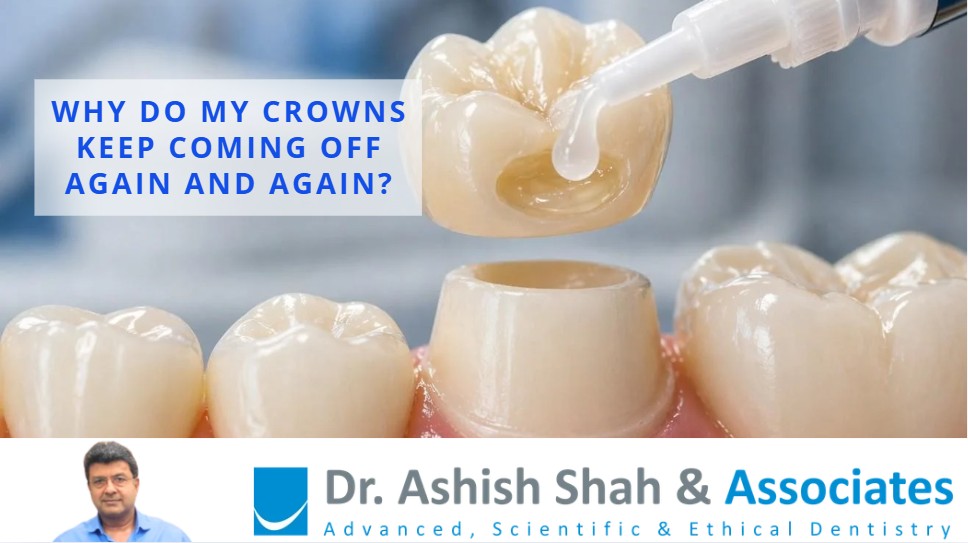
Why Does My Crown Keep Falling Off?
Has the same crown been cemented more than once?
Perhaps it stays in place for a few months—or even a few years—and then becomes loose again.
It is tempting to think:
“Maybe it just needs stronger cement.”
Sometimes that is true.
But when a dental crown repeatedly loosens, fractures or comes off, simply cementing it back may not address the real reason it is failing.
A crown is only one part of a much larger system involving the underlying tooth, its shape and strength, the bite, opposing teeth, jaw forces, gums and bone, and sometimes the condition of the entire dentition.
Understanding why the crown failed is therefore often more important than simply putting it back.
Is the Crown Really the Problem?
Not necessarily.
Think of a crown like the roof of a building.
If the roof repeatedly moves or breaks, replacing the roof may temporarily solve the problem. But what if the supporting structure underneath is too short, damaged or unstable?
Dentistry can sometimes be similar.
A crown depends upon several factors working together:
Healthy tooth structure + adequate retention + appropriate crown design + suitable material + good bonding/cementation + stable bite + manageable chewing forces.
Failure of any one—or a combination—can cause repeated problems.
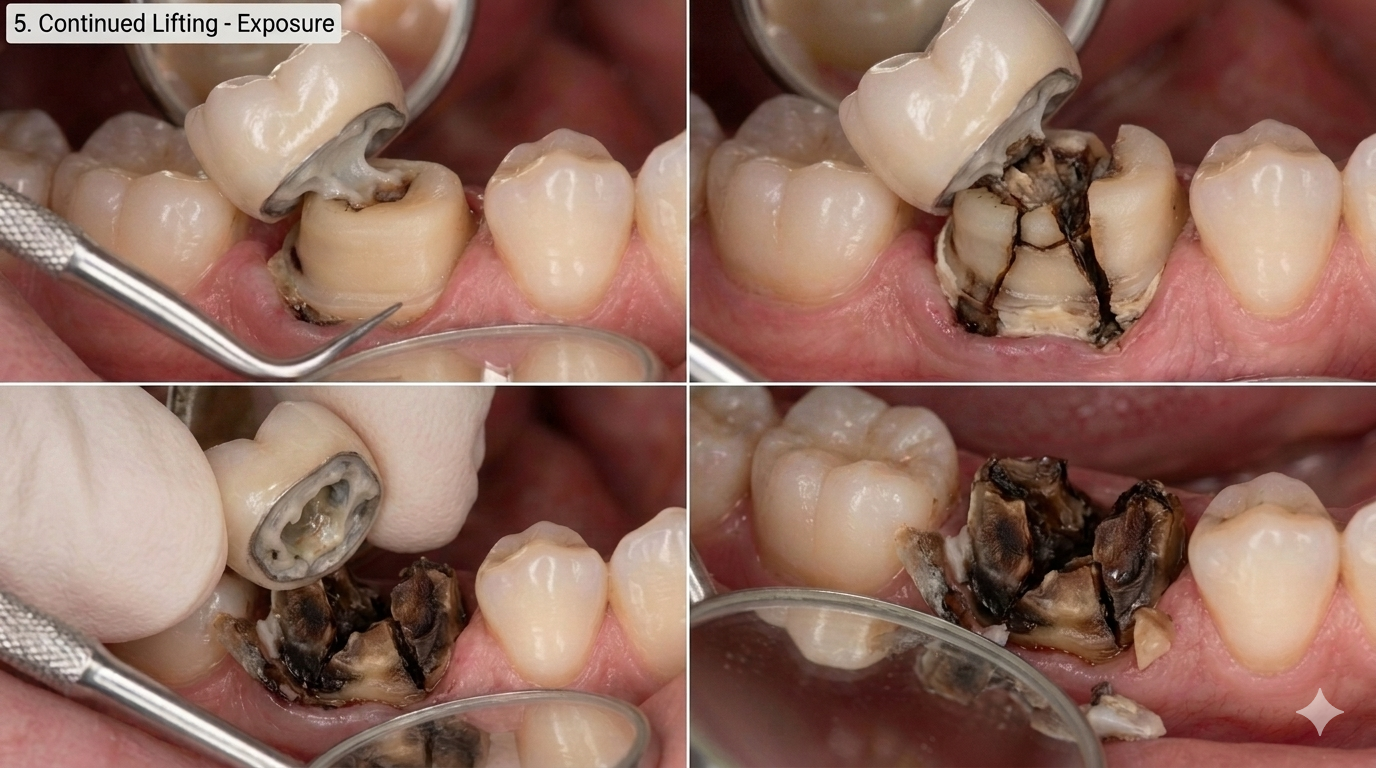
7 Common Reasons Why Dental Crowns Keep Coming Off
- There May Not Be Enough Tooth Left to Hold the Crown
A crown requires adequate healthy tooth structure for retention.
If a tooth has already undergone:
- a large filling,
- root canal treatment,
- repeated crown replacements,
- extensive decay,
- fracture,
- or significant tooth wear,
there may simply be very little natural tooth remaining.
The shorter or more compromised the supporting tooth becomes, the more difficult it can be to retain a crown predictably.
- The Tooth Underneath the Crown May Have Decayed or Fractured
Sometimes the crown is intact—but the tooth underneath has changed.
Decay can develop around crown margins. The underlying tooth can also fracture, particularly when heavily restored or root canal treated.
In such situations, simply recementing the old crown may hide the underlying problem rather than solve it.
- Your Bite May Be Putting Excessive Force on the Crown
This is one of the most important—and sometimes overlooked—reasons for repeated dental failure.
Your teeth do not function independently.
Every time you chew or clench, forces are transmitted across multiple teeth.
If a crown receives excessive or poorly directed forces, it may repeatedly:
- loosen,
- chip,
- fracture,
- wear,
- or damage the supporting tooth.
This becomes particularly important when several teeth are missing, worn down or have already been extensively restored.
- Grinding and Clenching Can Generate Powerful Forces
Some patients clench or grind their teeth—often without realising it.
Over time, these forces may contribute to:
- worn teeth,
- fractured teeth,
- ceramic chipping,
- loose crowns,
- damaged bridges,
- and occasionally problems around implants.
A repeatedly failing crown may therefore be one clue in a much larger pattern of tooth wear or excessive bite forces.
- The Crown Design, Fit or Material May Not Be Appropriate
Not every crown is identical.
Its long-term performance depends on:
- accurate preparation of the tooth,
- crown thickness,
- marginal fit,
- material selection,
- bonding or cementation technique,
- laboratory accuracy,
- and the forces under which the crown functions.
Modern digital dentistry allows us to evaluate many of these factors with considerably greater precision.
- The Problem May Involve More Than One Tooth
Imagine a patient who has:
- several old crowns,
- missing teeth,
- worn teeth,
- root canal-treated teeth,
- implants,
- bridges,
- and an altered bite.
If one crown repeatedly fails, treating that crown in isolation may sometimes be inadequate.
The more extensively a mouth has been restored, the more important it becomes to understand how all the teeth function together.
- Sometimes Recementing the Crown Is Absolutely the Correct Treatment
A crown coming off once does not mean that someone requires extensive dental treatment.
Sometimes:
- the crown is perfectly serviceable,
- the supporting tooth is healthy,
- the bite is satisfactory,
- and straightforward recementation is all that is required.
Good dentistry is not about making treatment more complicated.
It is about identifying the simplest treatment capable of predictably solving the actual problem.
The important question is not “Can this crown be cemented again?”
It is “Why did it come off?”
I would visually highlight that sentence.
When Should Repeated Crown Failure Be Investigated More Thoroughly?
Consider a comprehensive assessment when:
- The same crown has come off repeatedly.
- Several crowns have loosened or fractured.
- Teeth are progressively wearing down.
- You frequently fracture teeth or restorations.
- Your bite feels uncomfortable or has changed.
- You grind or clench your teeth.
- Several teeth have already undergone root canal treatment.
- You have a mixture of crowns, bridges, implants and missing teeth.
- Dental treatment seems to continue year after year without reaching stability.
“A real case illustrates why repeatedly repairing or replacing a restoration without identifying the underlying problem may not provide a lasting solution.”
Patient Stories:
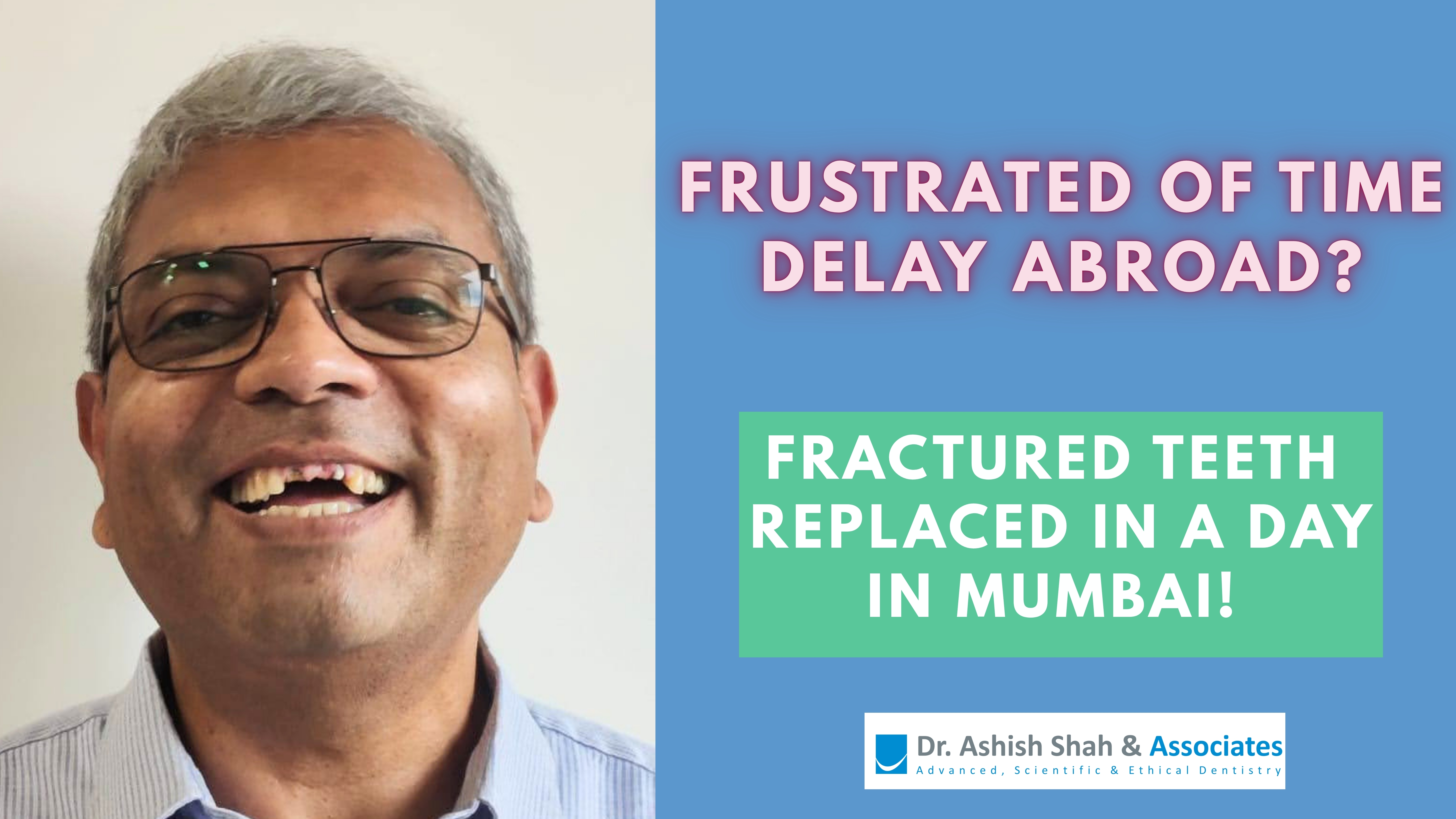
Sharing a case of a patient from the UK. He had undergone a bridge a few months ago. He started getting pain in one of the teeth within the bridge. He underwent a couple of visits with local dentists in the UK.
“There was uncertainty about the appropriate line of treatment.”The patient visited us when his friend gave him our strong reference. We diagnosed the underlying problems, drew a precise treatment plan, and after a thorough discussion with him, did his treatment . Everything was over within just 2 visits
Read the full patient story: From a fractured bridge to a new smile in 24 hours
What Should Be Evaluated Before Replacing a Repeatedly Failing Crown?
A comprehensive evaluation may include:
The Tooth
How much healthy tooth structure remains?
The Foundation
Is there decay, fracture or an inadequate core?
The Crown
Is its fit, design and material appropriate?
The Bite
Where and how does this tooth contact?
The Forces
Is there evidence of grinding, clenching or excessive loading?
The Rest of the Mouth
Are other teeth worn, missing, mobile or extensively restored?
The Long-Term Plan
Will treating this tooth alone provide stability—or is it simply another repair in an increasingly compromised dentition?
Diagnostic montage
This is an ideal place for:
- clinical examination,
- intraoral scanner,
- digital models,
- CBCT/appropriate radiographs,
- bite assessment,
- photographs,
- treatment planning on your computer.
When Does Full Mouth Rehabilitation Enter the Discussion?
Not every failed crown needs Full Mouth Rehabilitation.
However, when repeated crown failures occur alongside multiple damaged teeth, severe tooth wear, missing teeth, failing restorations or an unstable bite, treating one tooth after another may no longer address the overall problem.
This is when scientifically planned Full Mouth Rehabilitation may need to be considered.
Full Mouth Rehabilitation does not simply mean “putting crowns on all the teeth.”
It is the comprehensive assessment and restoration of a compromised dentition with the objective of creating:
- a stable bite,
- comfortable chewing,
- appropriate tooth form,
- protection of remaining tooth structure,
- harmonious function,
- natural aesthetics,
- and, most importantly, long-term stability.
The objective is not to perform more dentistry.
The objective is to reduce the cycle of repeated dentistry.